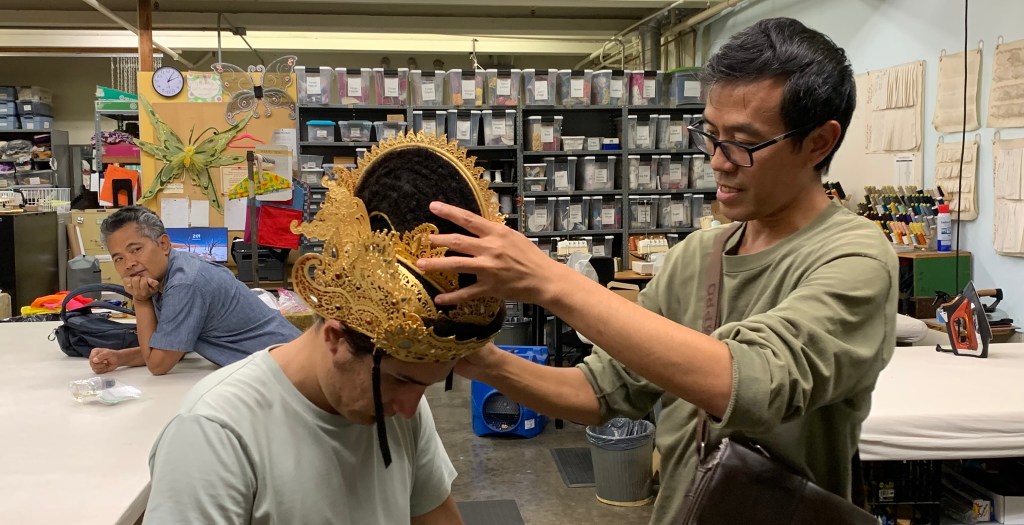
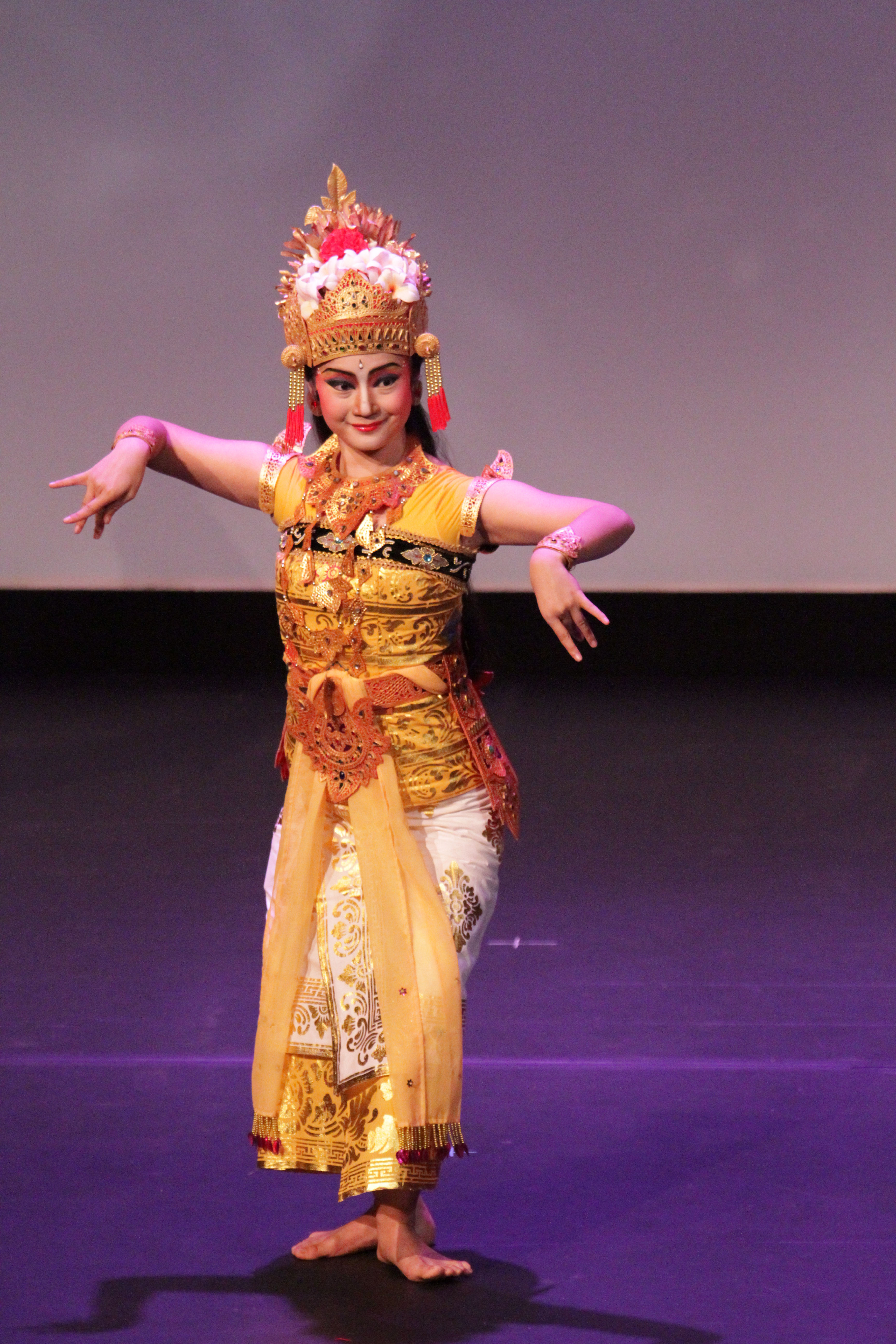
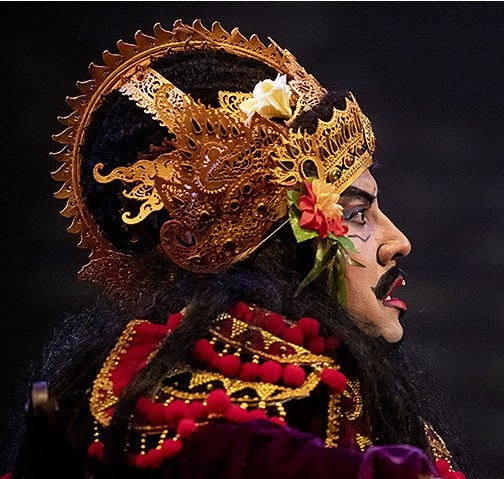
Panji and the Lost Princess features a variety of dance and live action, both in front of the projection screen and shadow-cast on it, accompanied by gamelan music. In Balinese wayang listrik, actor-dancers, ceremonial dancers (rarejangan), and gamelan musicians wear traditional costumes, stunning pieces of art which would help transport the audience into the Kingdom of Kahoripan, Raden Ino Kertapati’s (Prince Panji) domain, and the courts of Langke Sari, Panji’s fiancee, and the villain King Terate Bang.
Combined with dramatic makeup and beautiful headdresses, Balinese wayang listrik costumes are able to transform performers into various halus (refined) or keras (rough) characters: a graceful princess, a court lady, a heroic king, or a supernatural being of immense strength. Since costume reflects the nature of a character, it might include a large number of ornate pieces, like gelungan (crown/headdress), a long lamak (piece hanging from the chest), gelang kana (bands for the wrists and arms), badong (big, circular bib with pompoms and accessories), and various straps and belts, like sabuk.
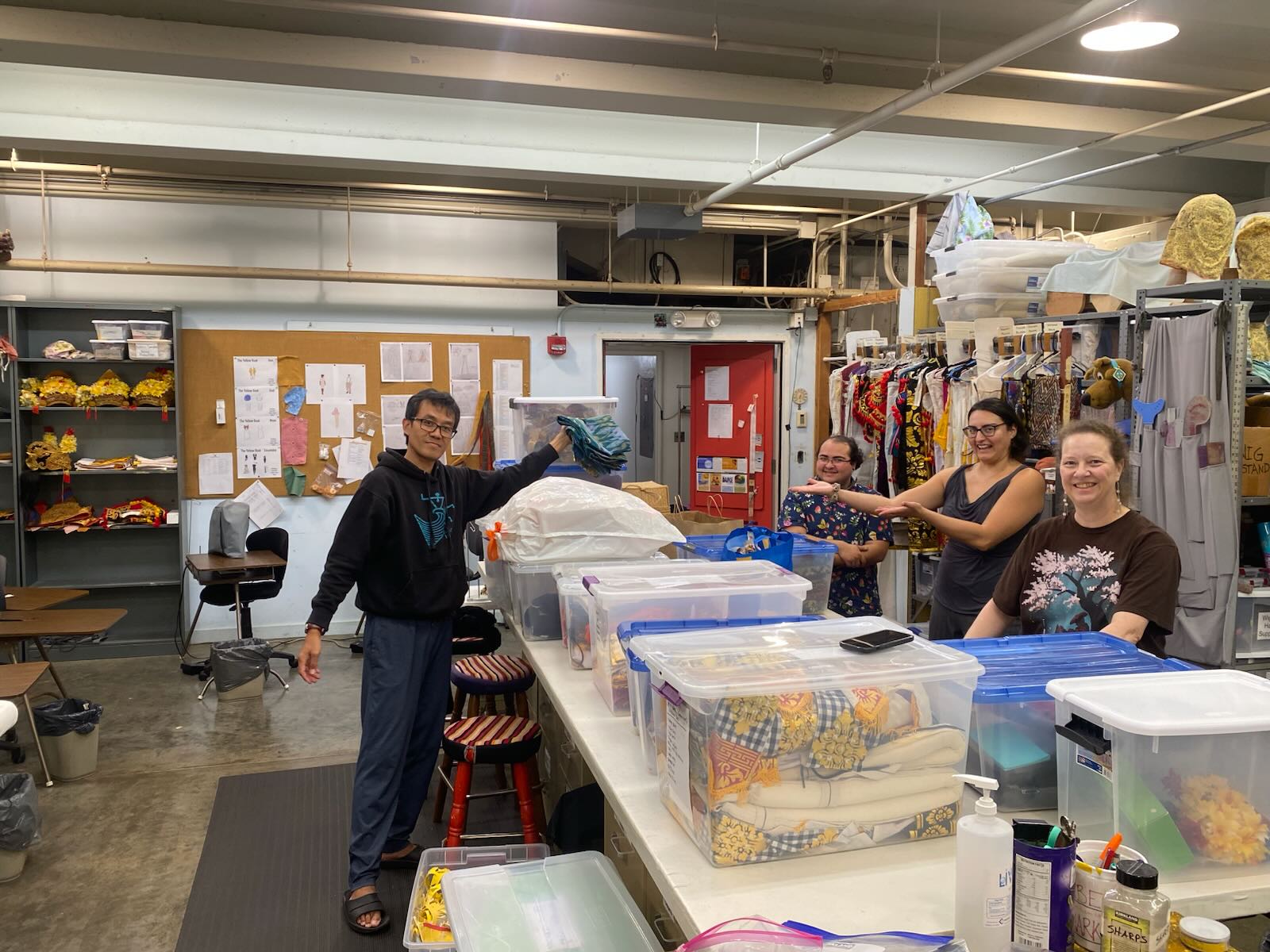
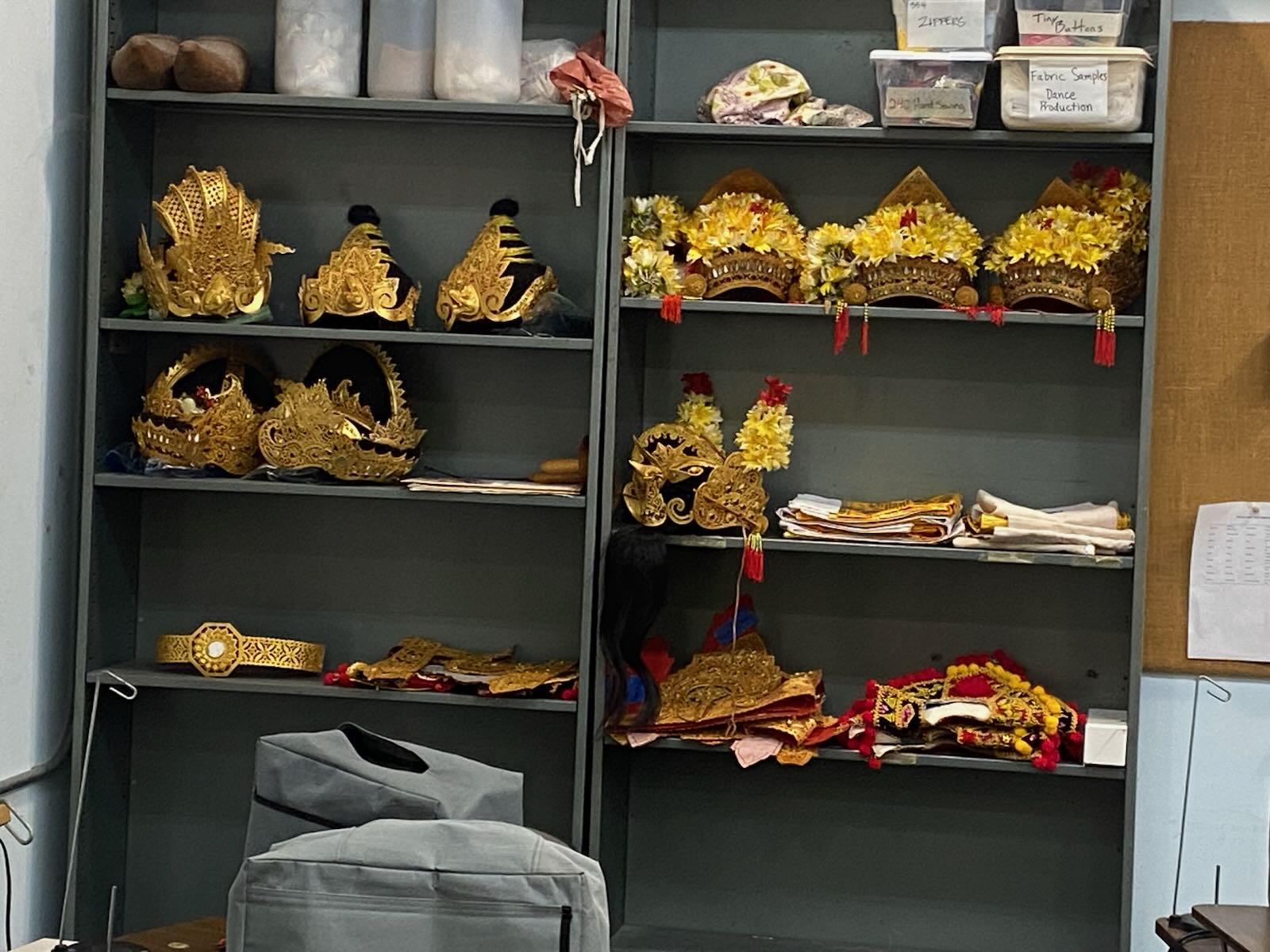
This is why a large-scale production like Panji and the Lost Princess needs to start assembling costumes as soon as casting is finalized. In the photo below (left), I Madé Widana, Hannah Schauer, Kennedy Theatre’s Costume Shop Manager, and two costume design students, assisted by I Madé Moja, assemble costumes for various characters. The second image (right) features a collection of headdresses and other ornate pieces.
By Maggie Ivanova
 Balinese Wayang Listrik at the University of Hawaiʻi at Mānoa